
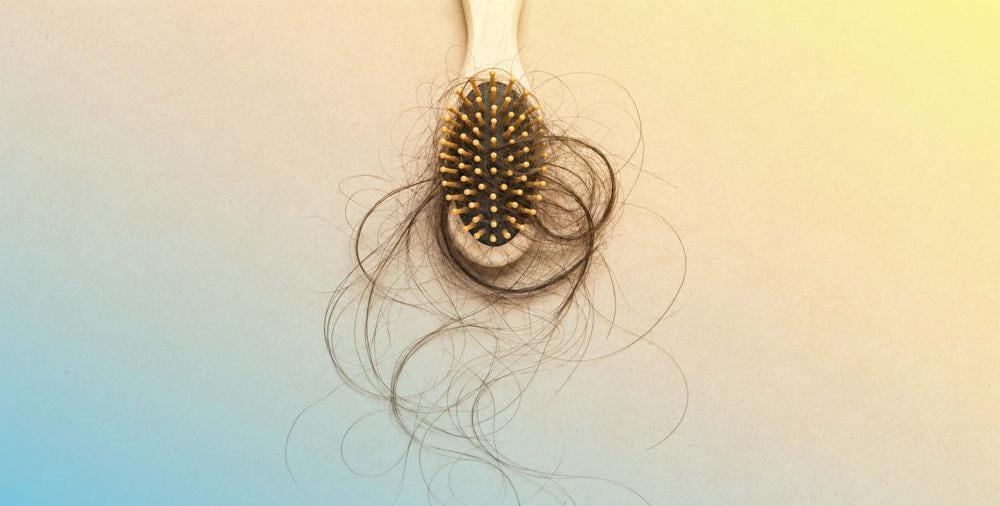
You might notice some hairs on your pillow, comb, or while showering, and this doesn't necessarily mean there's a problem. Hair naturally goes through phases of growth, rest, and shedding. However, when shedding becomes more noticeable, you can browse Ghaya Pharmacy Online is for viewing products designed for hair care, or when noticing the appearance of gaps and gradual thinning of the hair, attention and careful evaluation are required.
The causes of hair loss vary from person to person. They may be related to genetics, hormonal changes, a lack of certain nutrients, stress, certain diseases and medications, or the way hair is cared for. Therefore, in this article from Ghaya Pharmacy, we will learn about the most important causes, the form of hair loss, its timing, and the accompanying symptoms that help in reaching the closest cause.
Is hair loss normal?
Yes, losing some hair daily is a normal part of the hair growth cycle, and medical sources state that losing about 50 to 100 hairs a day may be within the normal range for many people, but this number is not a fixed diagnostic standard for everyone.
However, there is a difference between normal hair loss and hair loss that leads to a decrease in its density, and some signs that deserve attention are:
- A noticeable increase in the amount of hair loss compared to normal.
- The appearance of gaps or bald patches.
- Widening of the hair part or thinning of the crown area.
- The hairline has receded at the front.
- Decreased density of the hair tail or a more visible scalp.
- Continued shedding or increased over time.
Therefore, the assessment of the condition does not depend solely on the number of hairs lost, but also on the pattern of hair loss, its duration, and the presence of other symptoms.
What are the causes of hair loss?
There is no single cause that applies to all cases, and some of the most likely causes are:
1- Genetic causes
Hereditary hair loss is one of the most common causes of hair loss in both men and women, and it results from the effect of genetic factors on hair follicles.
- In men, it may appear as a gradual receding of the hairline or a bald patch on the top of the head.
- In women, it often appears as a gradual thinning and widening of the hair parting, and hereditary hair loss may begin at an early age in some people.
2- Hormonal changes
Hormonal changes can be linked to hair loss at certain stages, including:
- Pregnancy and postpartum care, and the attention this stage requires, are included in the section Mother and baby supplies , plus menopause.
- Menopause.
- Thyroid disorders.
- Some hormonal disorders.
- Polycystic ovary syndrome when it is associated with symptoms of hair loss.
Here are some of the causes of hair loss in women that may require evaluation beyond external hair care.
3- Vitamin and mineral deficiency
A deficiency in certain nutrients can lead to hair loss. Some of the elements associated with hair health are iron, zinc, protein, and certain vitamins. Strict diets, severe weight loss, and malnutrition can also affect the hair growth cycle.
This does not mean that all hair loss is caused by vitamin deficiency. Confirming a deficiency requires proper evaluation, and if a confirmed deficiency needs to be addressed, appropriate treatment can be chosen. Suitable vitamin pills should be taken after consulting a specialist, while being aware of the possibility of other underlying causes at the same time.
When searching for hair care products, Ghaya Pharmacy offers a dedicated section for them. Hair supplements are available , but choosing any supplement should not be a substitute for assessing the cause of hair loss or treating a proven deficiency.
4- Stress and psychological pressure
Severe psychological stress can be associated with some types of temporary hair loss, including telogen effluvium, where a larger percentage of hair follicles enter the resting phase, and then hair loss appears some time after the triggering event. This may occur after a severe illness, surgery, a major physical change, or a period of psychological stress.
Therefore, stress should not be assumed to be the cause in every case of hair loss without evaluating the other possibilities.
5- Diseases and health conditions
Certain health conditions can be associated with hair loss, including:
- Thyroid disorders.
- Alopecia areata.
- Some scalp infections or diseases may sometimes require attention to skin health and the use of Skin care products suitable for the surrounding area.
- Some types of infections, such as ringworm of the scalp.
- Some chronic diseases.
- Some medicines and medical treatments.
The way hair loss appears varies depending on the cause; it may be widespread across the entire head or appear in specific areas.
6- Harsh hair care and chemicals
Dyes, chemical straightening, and frequent heat styling can cause hair damage, and play a role Personal care products play an important role in maintaining the health of hair follicles. Hairstyles that constantly pull on the hair can lead to a type of hair loss known as traction alopecia. Here, it is important to differentiate between hair loss from the roots and hair breakage.
- Damage from heat or chemical treatments can cause hair to become brittle and appear thinner. When hair thinning is due to breakage rather than hair loss from the follicles, caring for the ends and minimizing damage becomes an important part of your routine. One product available at Gaya Pharmacy is Tresemme Split End Protection Shampoo 400ml , specifically formulated for dry and damaged hair.
- True hair loss occurs when a hair falls out of its follicle.
What are the causes of hair loss in women?
The causes of hair loss in women vary depending on age, health stage, and hair loss pattern, and some possibilities include:
- Hormonal changes during pregnancy and after childbirth.
- menopause.
- Hereditary hair loss.
- Iron deficiency or deficiency of certain nutrients.
- Thyroid disorders.
- Some hormonal disorders, such as polycystic ovary syndrome, when associated with the condition.
- Strict diets or significant weight loss.
- Stress, illness, or surgical procedures.
- Some medications.
- Constant hair pulling or damage due to chemical treatments.
Genetic hair loss in women often manifests as general thinning or widening of the hair part, which may prompt some to use [treatments/treatments]. Makeup products are a temporary cosmetic solution, while some other types may appear as specific areas or a receding hairline.
Causes of hair loss in men
One of the most common causes of hair loss in men is hereditary baldness, which may begin with a receding hairline or the appearance of a bald patch on the top of the head, and then gradually develop in some people. This type may begin at an early age in some men, even in their late teens or early twenties. There may be other causes, such as:
- Aging.
- Some hormonal changes.
- Scalp diseases or infections.
- A deficiency in certain nutrients.
- Stress or severe illness.
- Some medications.
- Hair pulling or damage due to the method of care.
Therefore, a receding hairline does not automatically mean that the cause is genetic, especially if the hair loss is sudden or accompanied by symptoms on the scalp.
Causes of hair loss in young people
Hair loss can begin at a young age, and young age does not necessarily mean that the hair loss is abnormal. Some possible causes of hair loss in young people include:
- Genetic factors.
- Stress and psychological pressure.
- Unbalanced diet.
- A deficiency in certain nutrients.
- Thyroid disorders.
- Some scalp diseases.
- Some medications.
- Major physical changes or severe illness.
The American Academy of Dermatology notes that hereditary hair loss may begin in some people as early as adolescence, although it often appears at later ages.
Causes of hair loss at the front
When hair loss is concentrated at the front of the head, the probabilities vary depending on gender, hairline shape, and the rate at which the problem develops, and the causes may include:
- Hereditary hair loss, especially in men.
- Hairstyles that constantly pull on the hair.
- Some types of alopecia.
- Some scalp diseases.
- Certain types of scarring hair loss.
Receding hairlines are different from diffuse hair loss, which leads to decreased hair density in most areas of the head. Therefore, identifying the pattern of hair loss helps the doctor determine the most likely cause.
Causes of severe and sudden hair loss
The causes of severe or sudden hair loss may differ from gradual, hereditary hair loss, and some possible factors include:
- Having a severe illness or fever.
- Undergoing surgery.
- Exposure to severe psychological or physical stress.
- Significant weight loss.
- undernourishment.
- Some medications.
- Thyroid disorders.
- Some autoimmune conditions such as alopecia areata.
- Telogen effluvium.
In some cases, hair loss begins some time after the triggering event, not necessarily on the same day. Telogen effluvium is an example of this, as it may appear months after exposure to significant physical or psychological stress. Therefore, its causes are often not determined by the amount of hair alone, and it may be necessary to look for the factor that preceded the appearance of the problem.
How can I find out the cause of my hair loss?
Determining the cause does not depend on a single test or product, but usually begins with the complete picture of the condition. The doctor may be interested in:
- The pattern of shedding and where it occurs.
- The duration of the problem and the rate at which it develops.
- Age and gender.
- Having a family history of hair loss.
- Previous and current skin conditions such as skin problems or Acne treatment .
- Medications and supplements used.
- Dietary patterns and weight loss.
- Health or psychological events that preceded the hair loss.
- Examination of the hair and scalp.
- Accompanying symptoms, such as itching, pain, inflammation, or the appearance of hairless patches.
Dermatological sources confirm that knowing the cause of hair loss is a crucial step in choosing the appropriate treatment, and some may seek help from certain sources. Home medical supplies and equipment are provided as directed by the doctor, because treatment varies depending on the type of problem.
What tests might a doctor order for hair loss?
There is no single list of tests necessary for every person suffering from hair loss. The doctor determines the tests based on the symptoms, medical history, and the results of the hair and scalp examination. Tests may include, when certain causes are suspected:
- Blood image.
- Iron stock or some iron indicators.
- Thyroid gland functions.
- Some vitamins or minerals when there are indications of a deficiency.
The purpose of the tests is to look for a possible cause that can be treated, not to perform all the tests randomly.
Does iron deficiency cause hair loss?
Yes, iron deficiency can be linked to hair loss in some people, because iron is an important nutrient for many bodily functions, and low iron levels can lead to problems related to hair growth. This highlights the importance of understanding the relationship between iron and hair loss without assuming that iron is the cause in every case.
Iron deficiency may be more likely in some groups, but determining its presence requires appropriate assessment and testing. Therefore, it is not advisable to take iron supplements simply because hair loss is observed, but only after confirming the need for them and identifying the cause.
Can vitamin deficiencies cause hair loss?
A deficiency in certain nutrients, including iron, zinc, protein, and some vitamins, can be linked to hair loss, but the relationship is not the same for all people. Therefore, vitamin deficiency and hair loss do not necessarily mean that taking hair supplements will solve the problem. If there is no deficiency, supplements may not play a useful role in treating the cause.
The best course of action when a nutritional deficiency is suspected is to assess the diet and health status and conduct the tests that the doctor deems appropriate.
What about treating hair loss?
Treatment for hair loss depends on identifying the cause first; therefore, there is no single treatment suitable for all cases. For example, the approach to managing the condition might include:
- Genetic hair loss: Evaluate the condition with a dermatologist and discuss appropriate options.
- Proven nutritional deficiency: Treat the deficiency as directed by the doctor.
- Thyroid disorder: Treat the underlying problem under the supervision of a doctor.
- Temporary hair loss: Address the underlying cause and monitor the return of the hair growth cycle.
- Scalp problems: Diagnosing the condition and choosing the appropriate treatment.
There are different medical options for some types of hair loss, such as minoxidil in certain cases, while other cases may require other treatments. Medical drugs and specialized consultations are necessary, and no treatment should be started without knowing the type of hair loss and whether the treatment is suitable for the condition.
As for Hair treatments available at Ghaya Pharmacy can be used as part of a hair care routine according to its needs, but they are not a substitute for diagnosing the cause of hair loss or medical treatment if there is a medical problem.
Tips to help reduce hair loss
Not all types of hair loss can be prevented, but some habits may help reduce hair damage and maintain its health:
- Make sure you eat a balanced diet that includes appropriate sources of protein and nutrients.
- Avoid crash diets and rapid weight loss.
- Reduce the use of high heat.
- Avoid hairstyles that constantly pull on the hair.
- Reduce the frequency of dyeing, straightening, and harsh chemical treatments.
- Handle the hair gently, especially when it is wet.
- Avoid excessive brushing or pulling of the hair.
- Do not use hair supplements indiscriminately without knowing if you need them.
- It is helpful to choose hair care products according to the hair's condition. For example, if the hair is dry and affected by styling, a specific product is available at Ghaya Pharmacy. Pantene Replacement Moisturizing Care Oil for Dry Hair 275ml , designed for dry hair and helps to facilitate combing and care for hair affected by styling.
Other shampoo options are also available for daily care, such as Gliss Hair Repair Shampoo 400ml and Pantene Anti-Hair Loss Oil Replacement 275ml . The product can be chosen according to the hair's needs and nature.
The American Academy of Dermatology recommends reducing heat, taking gentle care of hair, and avoiding hairstyles that cause constant tension, as these factors can lead to hair damage or loss over time.
When should you see a doctor because of hair loss?
Medical evaluation is recommended if hair loss is present:
- Sudden or severe.
- Accompanied by the appearance of bald patches or distinct spots.
- It causes the gaps to widen rapidly.
- Accompanied by the loss of eyebrows or eyelashes.
- Accompanied by itching, pain, redness, or inflammation of the scalp.
- This occurs in conjunction with other health symptoms.
- Continued for a long time without knowing the reason.
Early diagnosis may be important in some types of hair loss, especially cases that can lead to permanent hair loss if damage to hair follicles continues.
Most frequently asked questions
What are the most common causes of hair loss?
Some of the causes of hair loss are genetic, but it can also be related to hormonal changes, illness or severe stress, a deficiency of certain nutrients, some medications, and scalp problems.
What are the causes of hair loss in women?
It may include hormonal changes, pregnancy and postpartum, menopause, genetic hair loss, iron or other nutrient deficiencies, thyroid disorders, stress, and certain health conditions.
What are the causes of hair loss in men?
Genetic hair loss is considered one of the most prominent causes, and it may appear as a receding hairline or thinning at the top of the head, in addition to other causes such as diseases, some medications, nutritional deficiencies, and stress.
Does iron deficiency cause hair loss?
Iron deficiency can be associated with hair loss, but it should not be assumed that iron deficiency is the cause without proper evaluation or testing.
Can vitamin deficiencies cause hair loss?
A deficiency in certain nutrients may be associated with hair loss, but taking supplements is not appropriate simply because there is hair loss, as this depends on whether there is an actual deficiency or another cause for the condition.
What are the causes of sudden hair loss?
Sudden hair loss may be related to illness or severe fever, surgery, significant physical and psychological stress, significant weight loss, certain medications, or certain health conditions.
Why does hair fall out at the front?
Receding hairlines may be related to genetic hair loss, tight hairstyles can lead to hair loss in areas subjected to tension, and other types of alopecia may affect the front of the head.
What are the causes of excessive hair loss?
Excessive hair loss may be caused by temporary changes such as illness, severe stress, weight loss, a deficiency of certain elements, hormonal or medical disorders, or some types of hereditary hair loss.
Does stress cause hair loss?
Severe stress can be associated with certain types of hair loss, including telogen effluvium, and the hair loss may appear some time after the triggering event and not necessarily immediately.
When is hair loss considered abnormal?
Hair loss warrants more attention when it is sudden or severe, or when it is accompanied by noticeable gaps and patches, or symptoms in the scalp, or when it persists for a long time without a clear explanation.
Take care of your hair from the beginning
Now that we've learned about the causes of hair loss, remember that choosing the right products starts with understanding the needs of your hair and scalp, and through Home delivery pharmacy. You can easily order your supplies and discover the range of hair care products available to choose what suits your daily routine. If you have persistent or severe hair loss, do not hesitate to consult a doctor or pharmacist to determine the cause and the appropriate step.
Warning: The information in this article is for educational purposes only and does not replace professional medical advice. Please consult your doctor or pharmacist to determine the most appropriate treatment for your condition.